DISC DISORDERS
Disc Prolapse
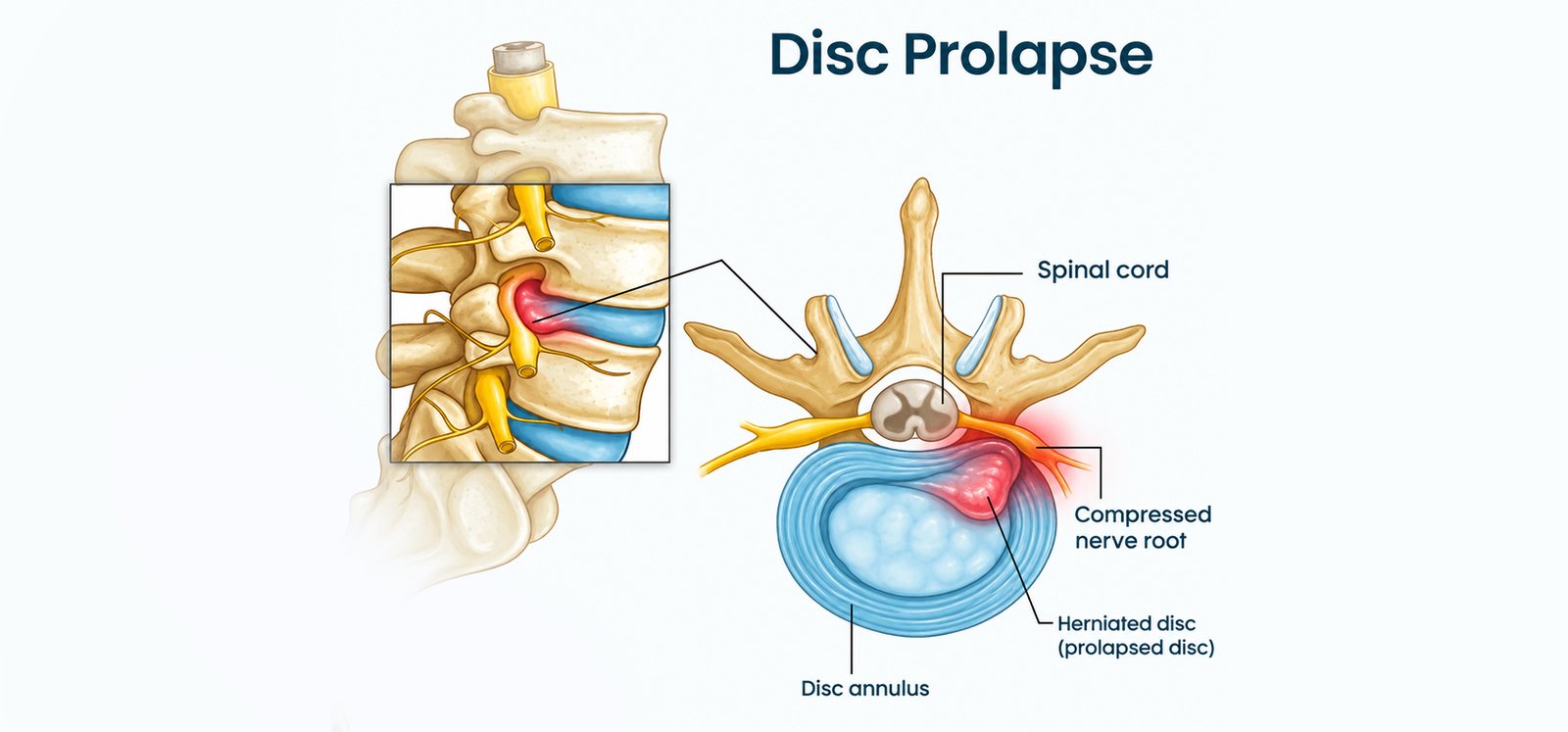
Herniation or bulging of an intervertebral disc that may affect nearby spinal nerves or the spinal cord.
Learn More
Specialized evaluation and treatment planning for a range of spinal conditions, including disc prolapse, canal stenosis, spondylolisthesis, spinal tumors, fractures, myelopathy, sciatica and CVJ anomalies. Care is guided by detailed clinical assessment, appropriate imaging and individualized treatment planning.
Herniation or bulging of an intervertebral disc that may affect nearby spinal nerves or the spinal cord.
Learn More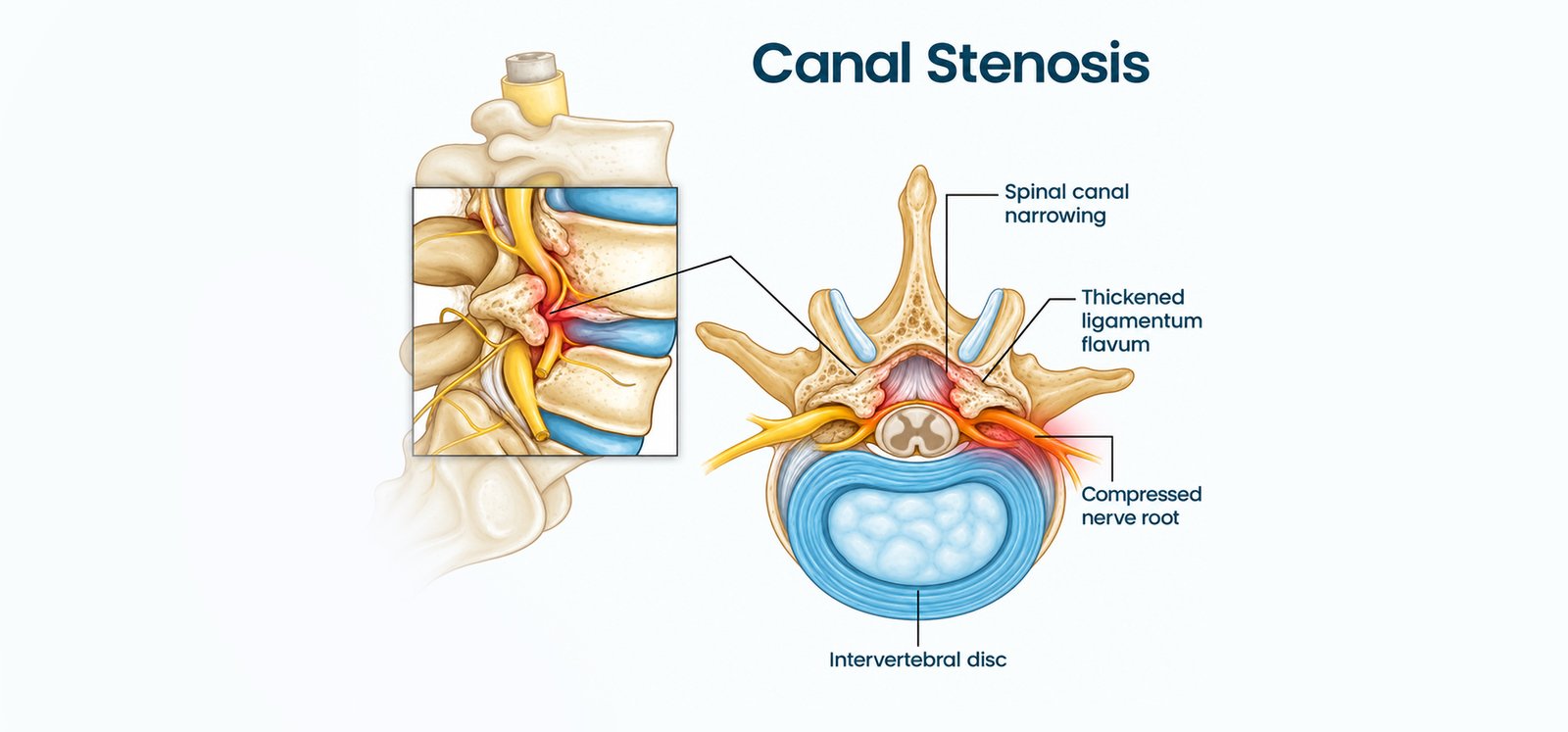
Narrowing of the spinal canal that can put pressure on the spinal cord or nearby spinal nerves.
Learn More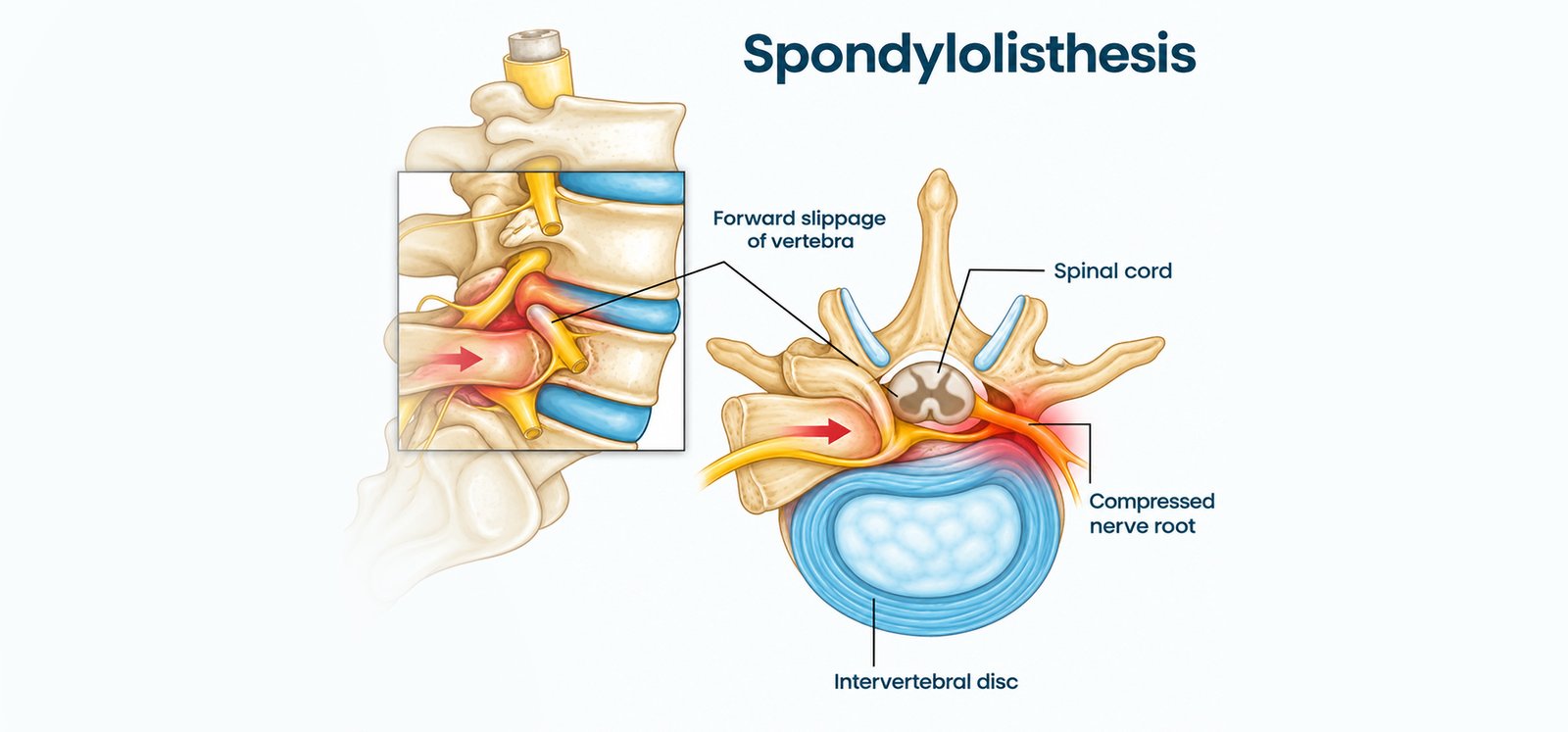
Forward slipping of one vertebra over the one below it, which may affect spinal alignment and stability.
Learn More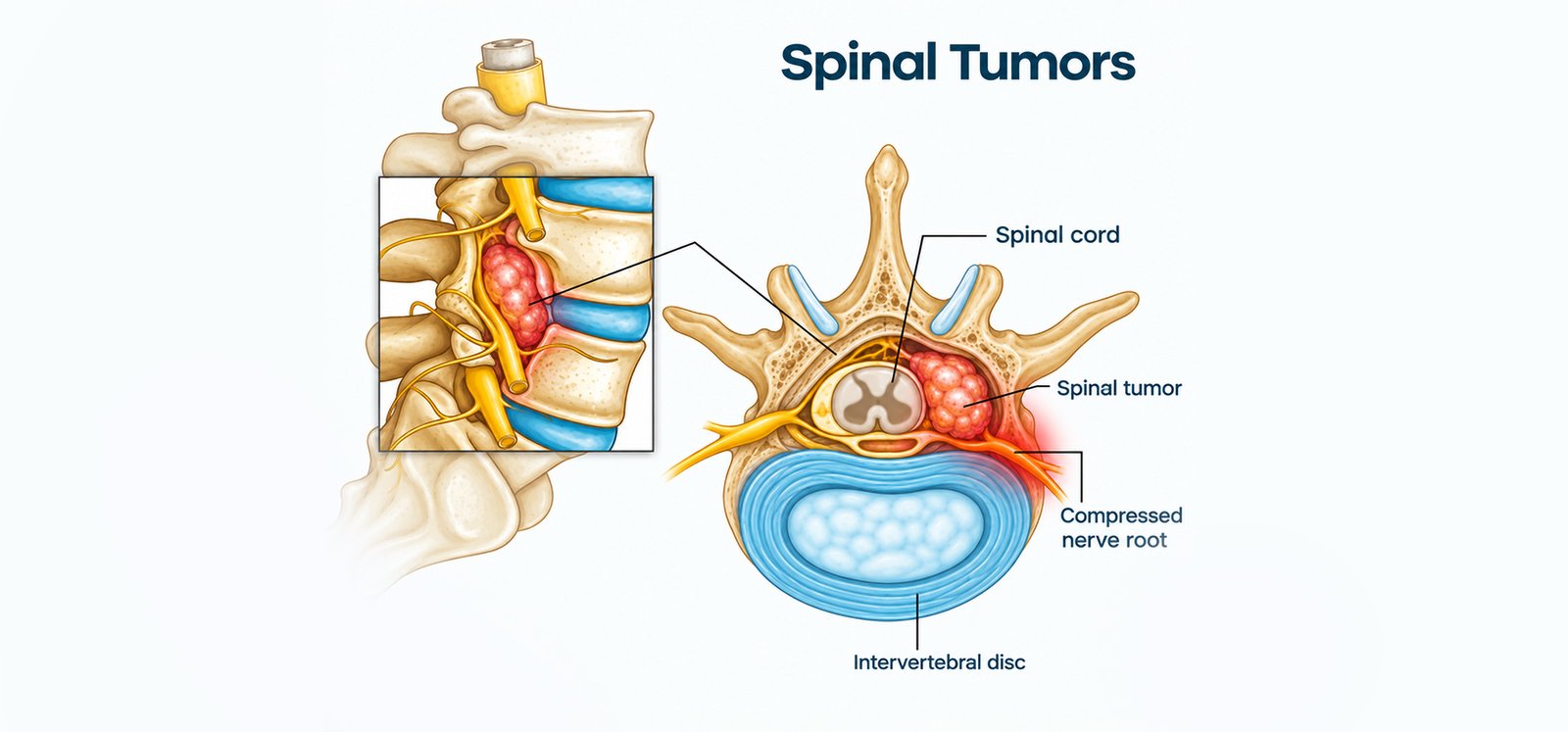
Abnormal growths in or around the spinal column that may affect the spinal cord or nearby nerves.
Learn More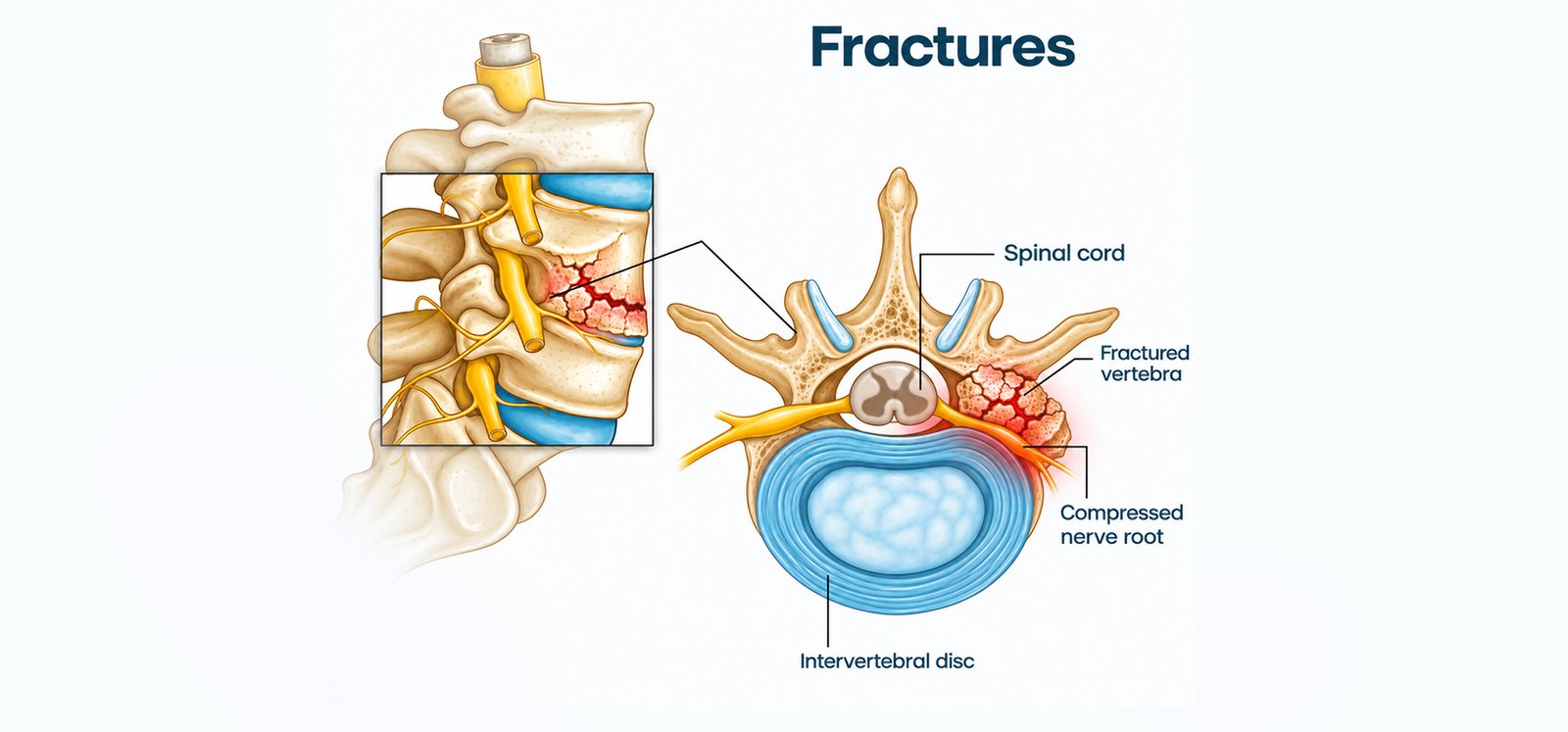
Breaks in the spinal vertebrae that may affect alignment, stability or nearby neurological structures.
Learn More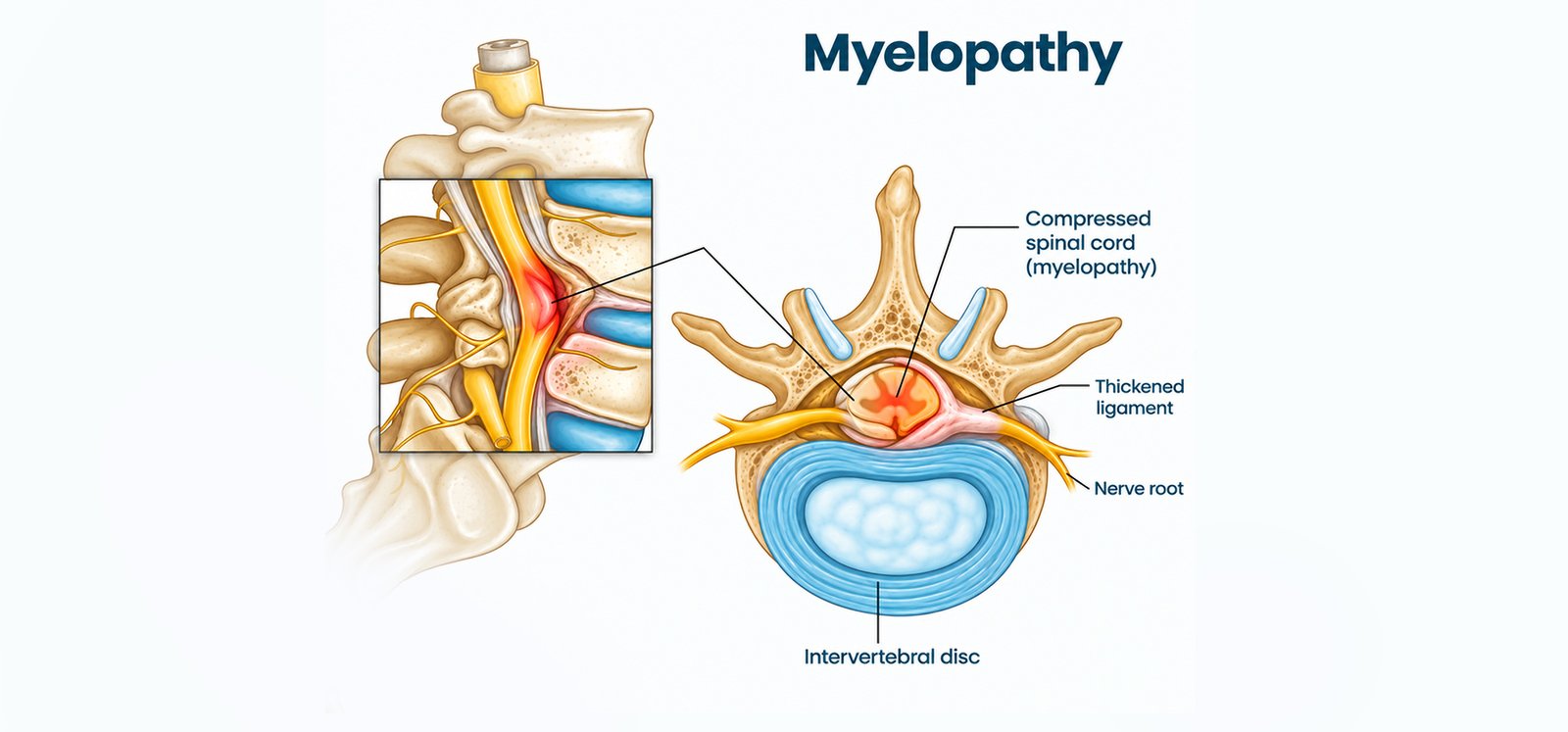
Severe compression or injury of the spinal cord that may affect movement, sensation and coordination.
Learn More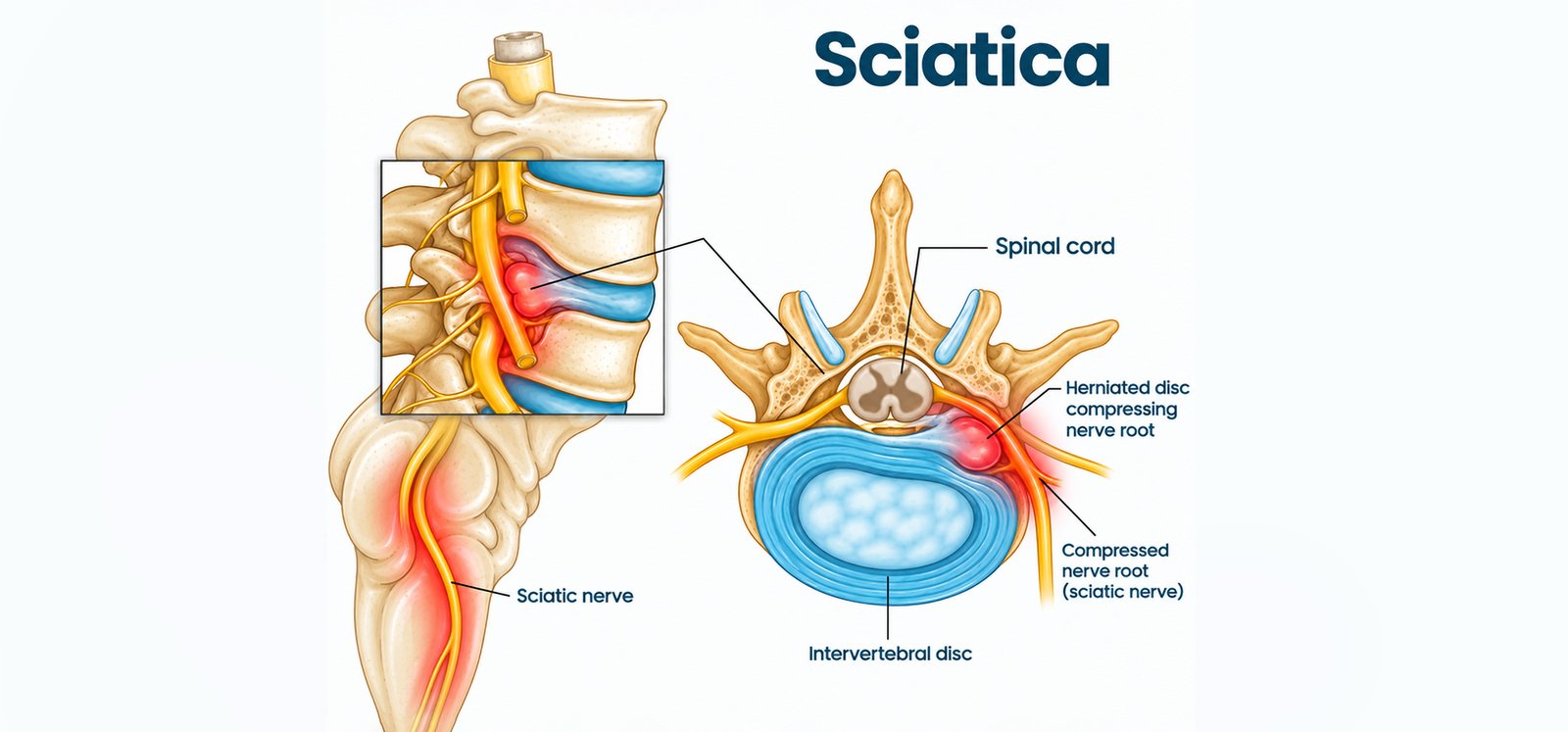
Pain radiating along the sciatic nerve from the lower back through the buttock and into the leg.
Learn More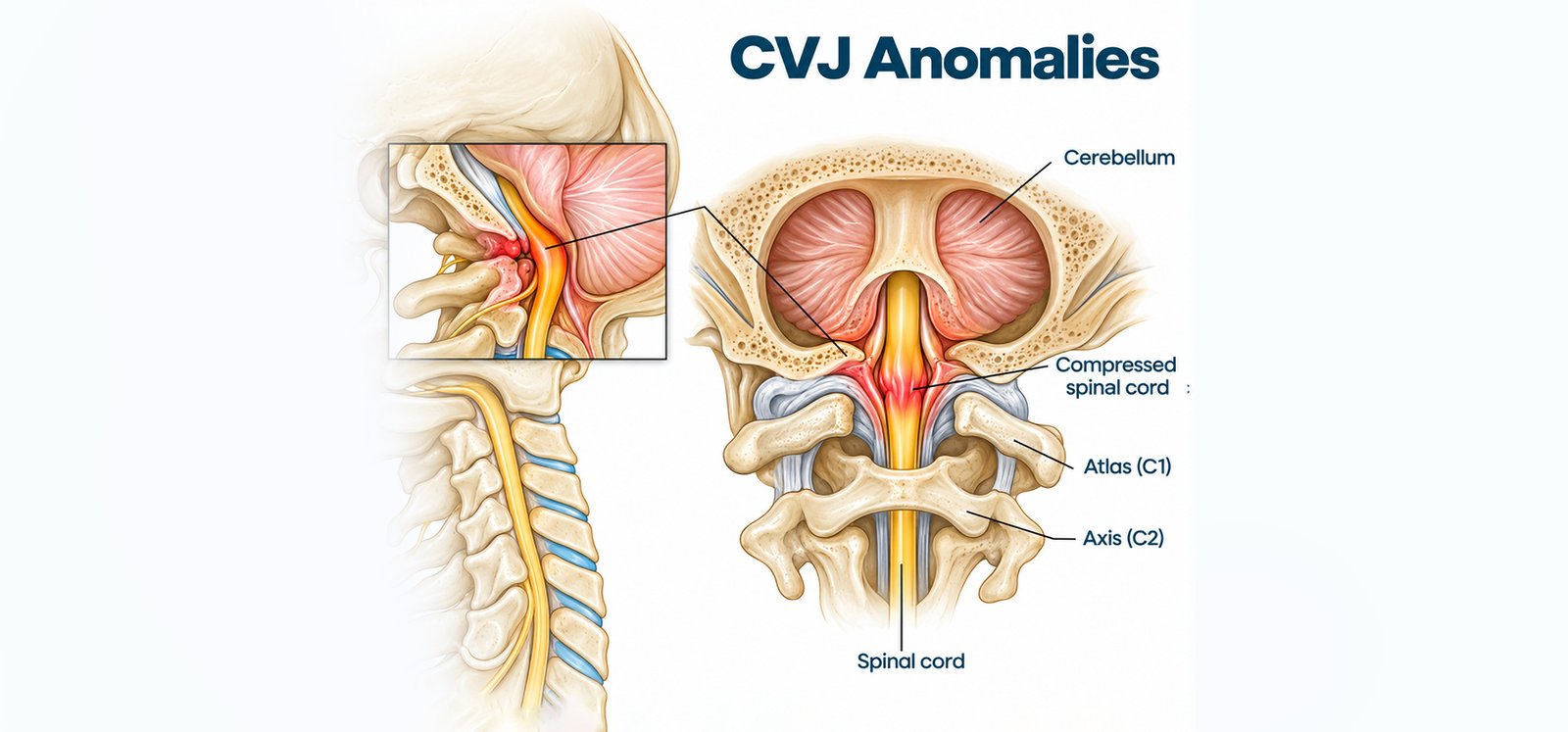
Congenital or structural malformations affecting the craniovertebral junction and upper cervical spine.
Learn More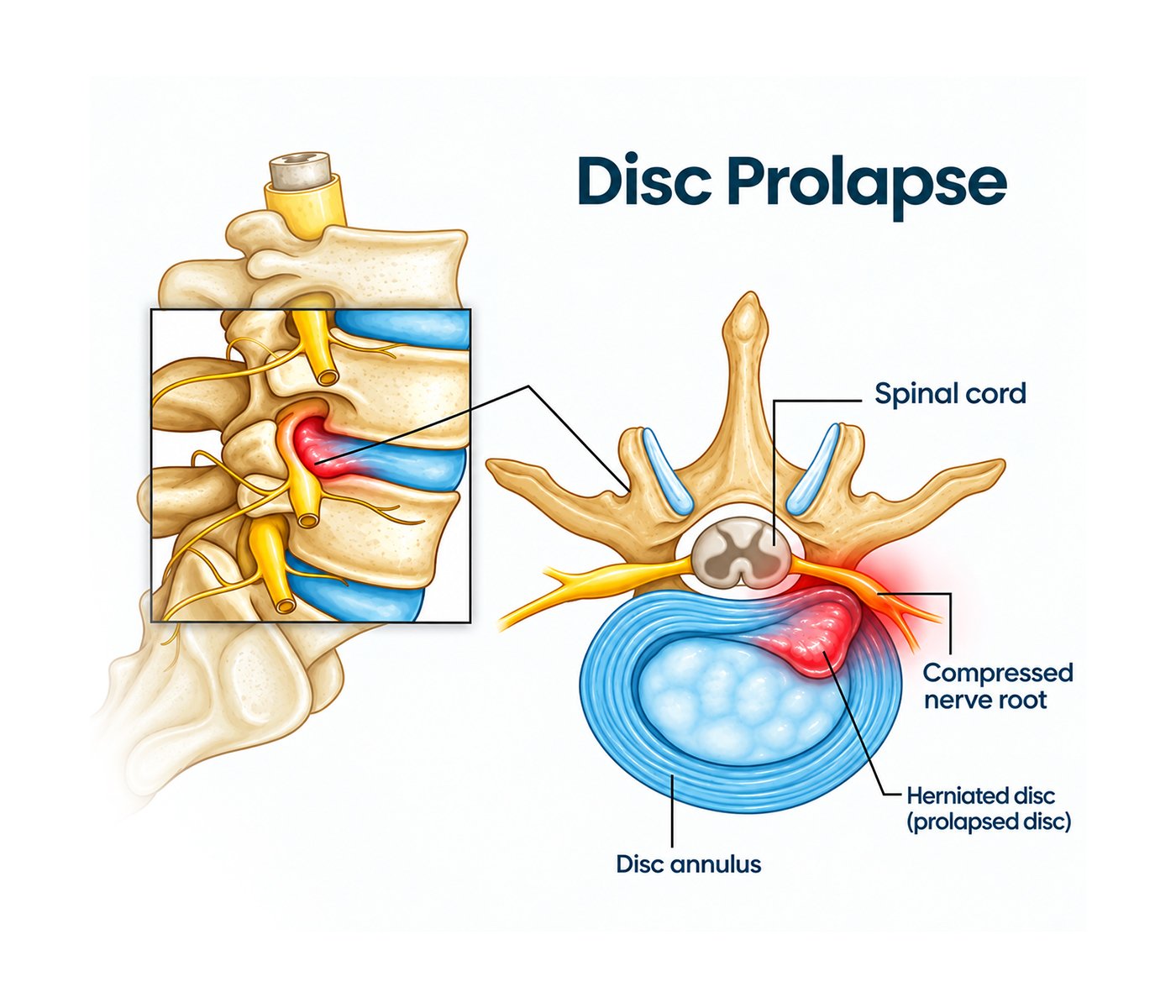
Disc prolapse occurs when part of an intervertebral disc extends beyond its normal position and may affect nearby spinal nerves or the spinal cord. It can occur in the cervical, thoracic or lumbar spine and may cause pain, numbness, weakness or other neurological symptoms depending on the location and degree of compression.
Evaluation includes neurological examination and appropriate spinal imaging to identify the affected level and assess nerve or spinal cord involvement. Treatment planning depends on symptoms, imaging findings and neurological status, with conservative management or surgical treatment considered according to the individual condition.
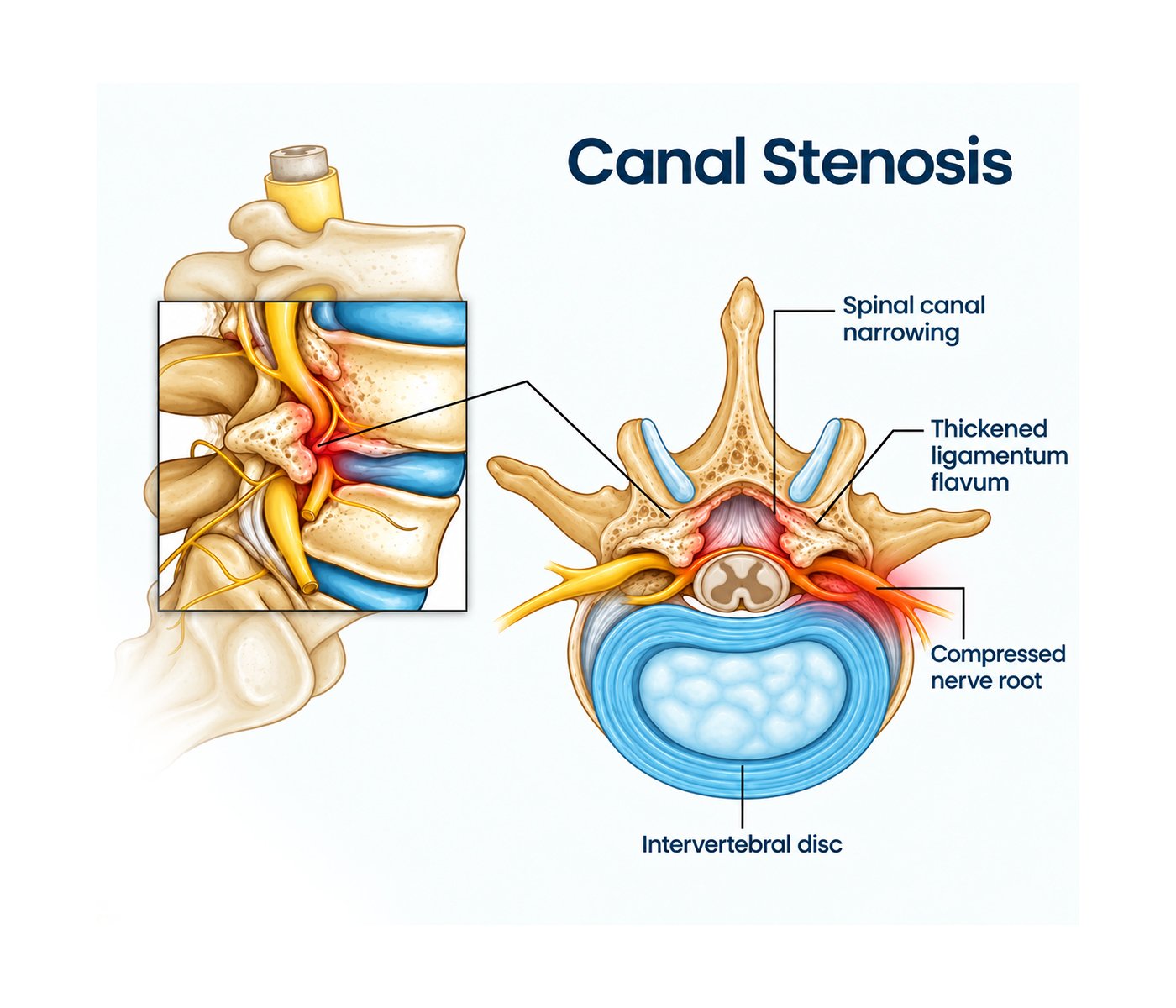
Spinal canal stenosis occurs when the space available for the spinal cord or nerves becomes narrowed. It may develop in the cervical or lumbar spine and can be associated with degenerative changes, disc problems or other structural conditions.
Evaluation includes neurological examination and appropriate spinal imaging to understand the location and degree of narrowing. Management is individualized according to symptoms, neurological findings and imaging results.
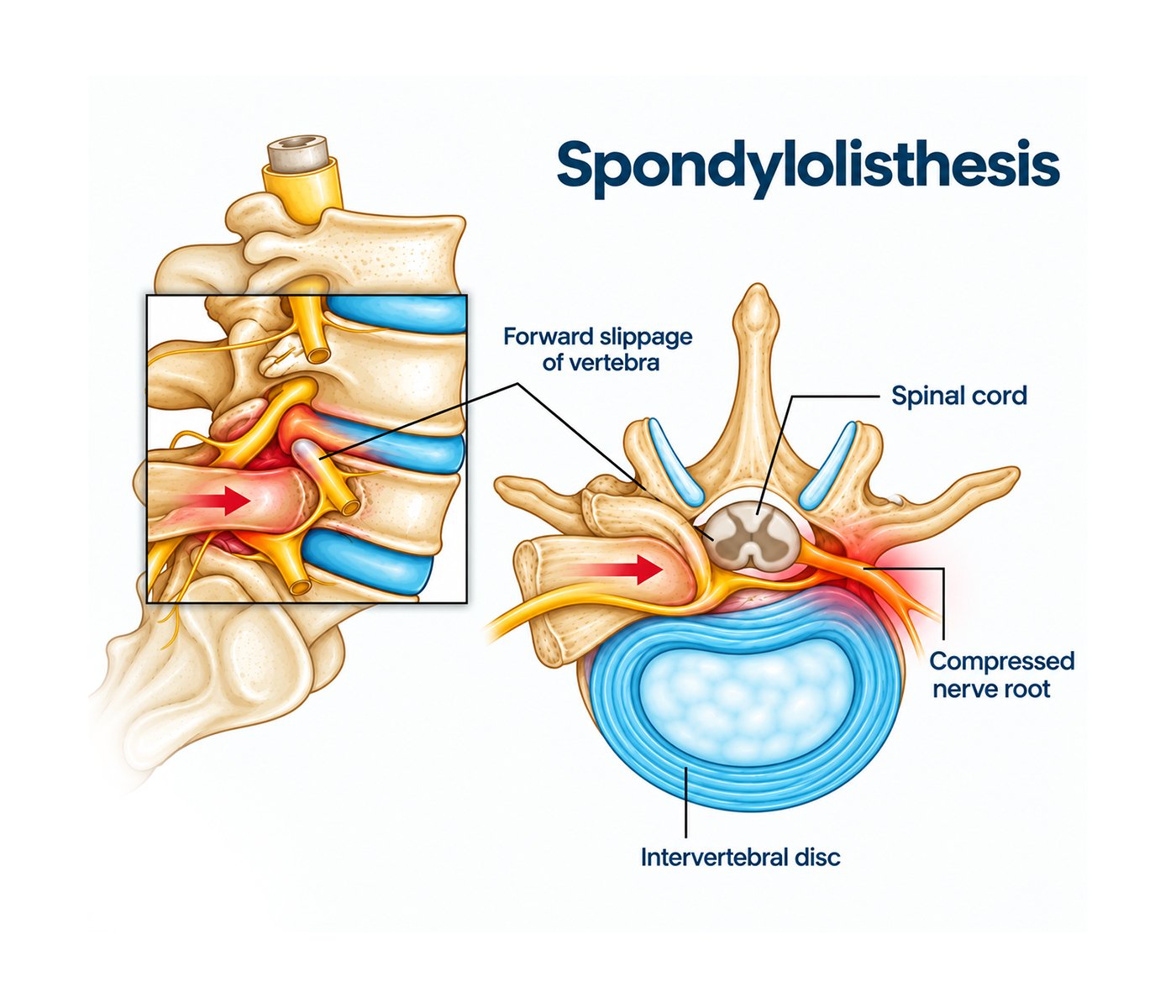
Spondylolisthesis occurs when one vertebra slips forward in relation to the vertebra below it. The resulting change in alignment can contribute to pain, instability or pressure on nearby nerves.
Evaluation includes clinical examination and spinal imaging to assess vertebral alignment, stability and possible nerve compression. Treatment planning is individualized according to symptoms, imaging findings and functional impact.
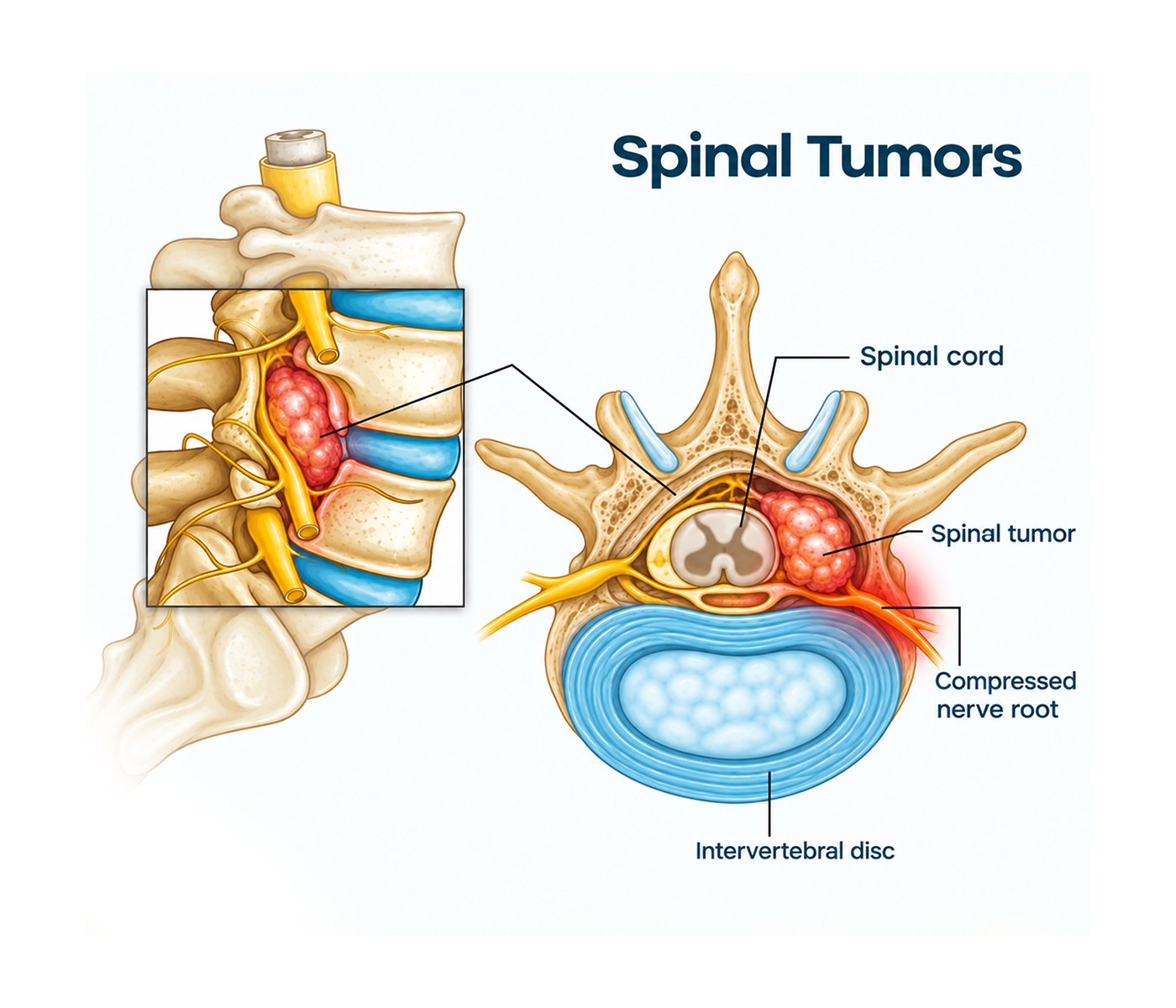
Spinal tumors are abnormal growths that may develop in or around the spinal column. Their effects depend on their type, size and location and whether they affect the spinal cord or nearby nerves.
Evaluation includes neurological assessment and appropriate spinal imaging to understand the lesion and its relationship with surrounding structures. Treatment planning depends on tumor characteristics, symptoms and neurological findings.
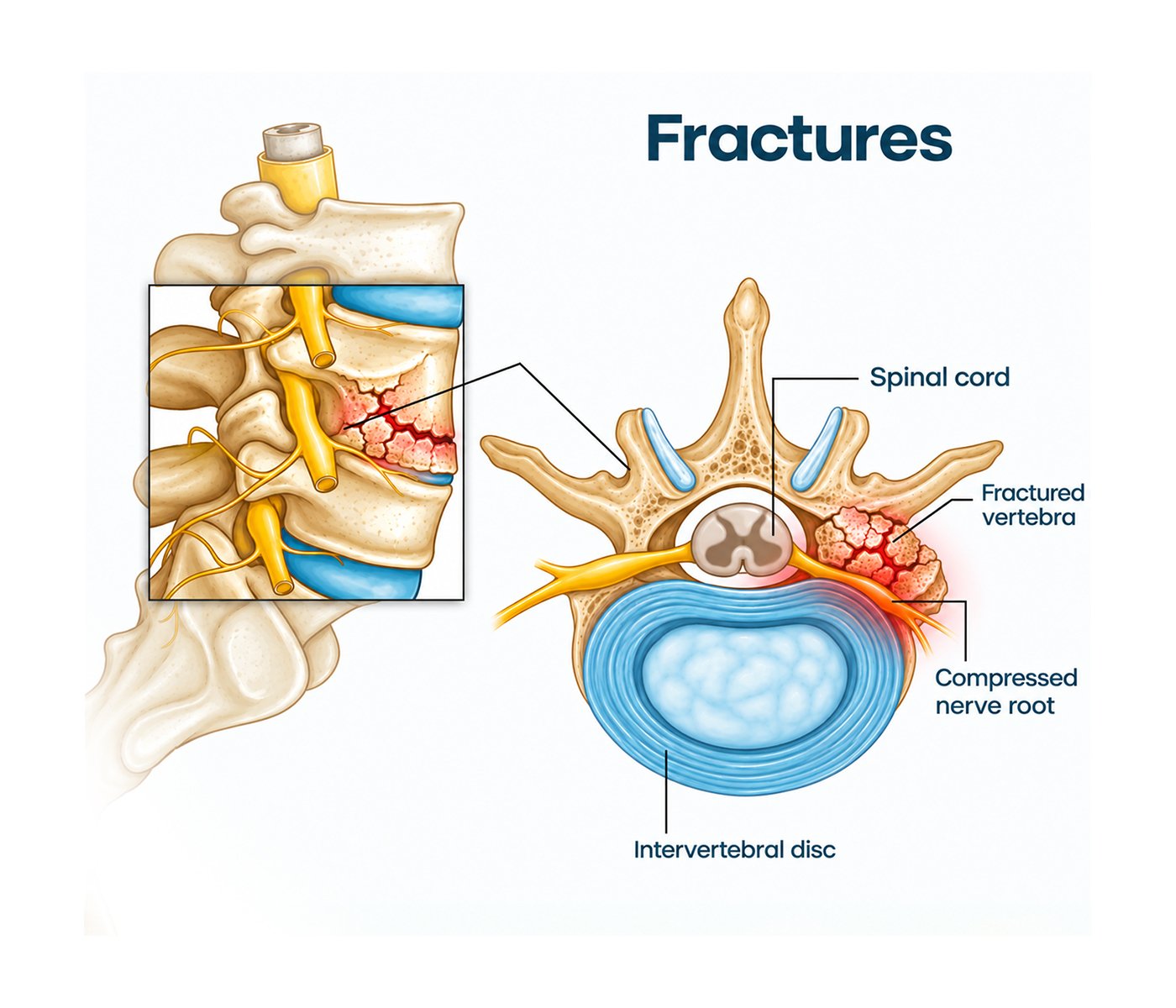
Spinal fractures are breaks in the vertebrae that may occur following trauma or in weakened bone. Their effects depend on the location and severity of the fracture and whether there is associated instability or neurological involvement.
Evaluation includes clinical examination and appropriate imaging to assess the fracture, spinal alignment and neurological structures. Management depends on fracture characteristics, stability and neurological status.
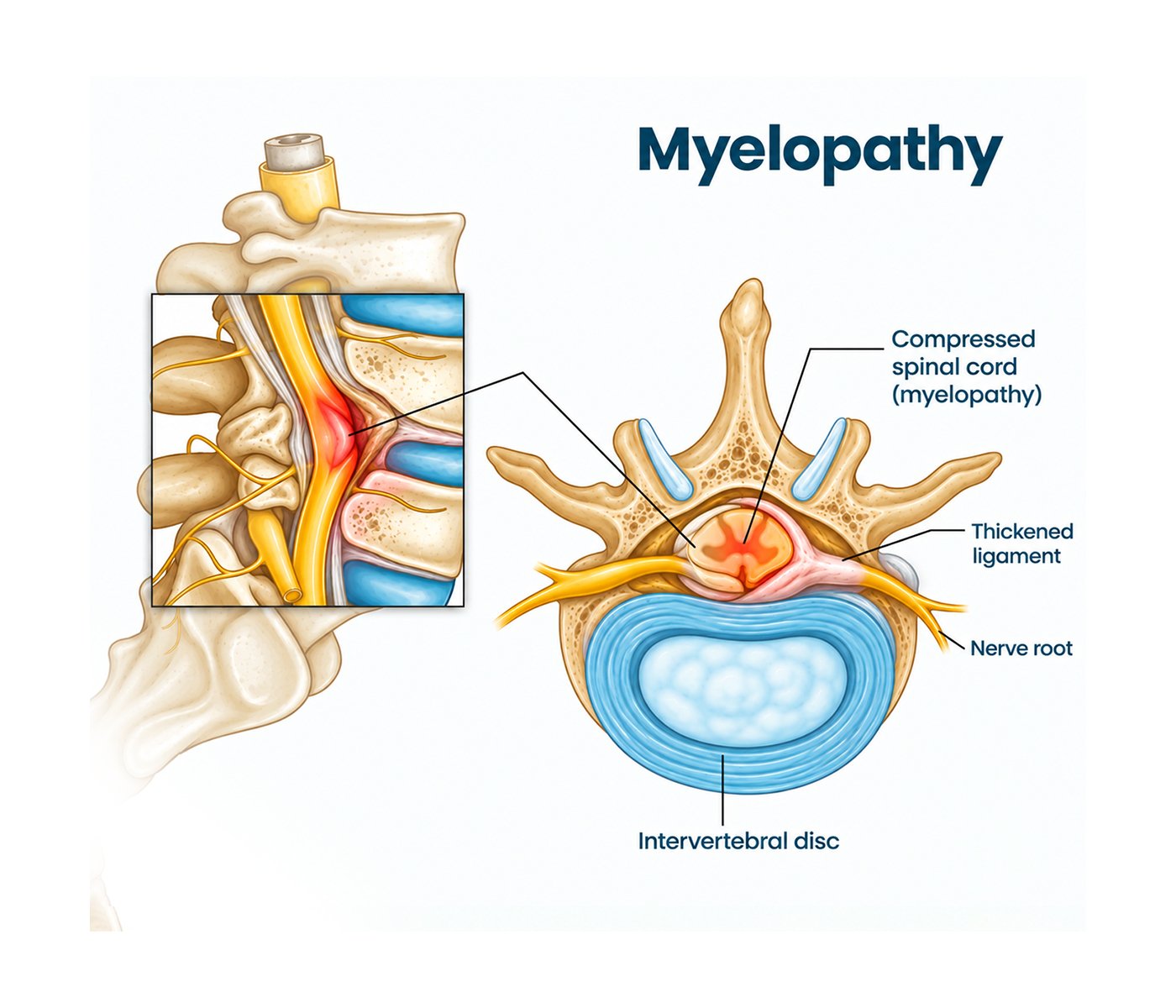
Myelopathy refers to spinal cord dysfunction resulting from significant compression or injury to the spinal cord. It can affect movement, sensation, coordination and walking, depending on the level and severity of spinal cord involvement.
Evaluation includes detailed neurological examination and appropriate spinal imaging to identify the level and cause of spinal cord compression or injury. Treatment planning depends on neurological findings, symptoms and imaging characteristics.
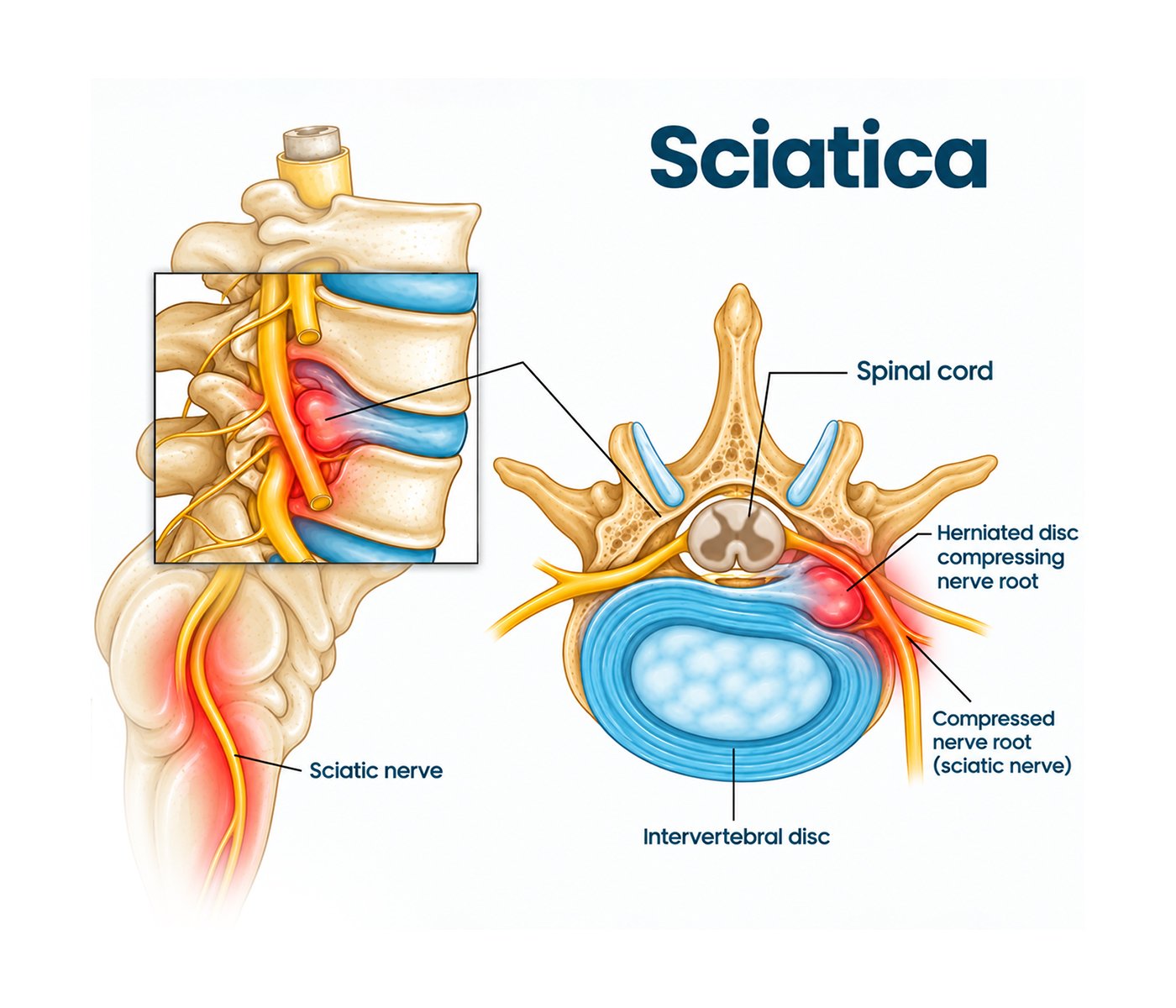
Sciatica describes pain that radiates along the sciatic nerve, typically extending from the lower back through the buttock and into the leg. It is commonly associated with irritation or compression of a nerve root in the lower spine.
Evaluation includes clinical and neurological assessment, with imaging considered when appropriate to identify the underlying cause. Treatment planning depends on the source of nerve irritation, symptom severity and neurological findings.
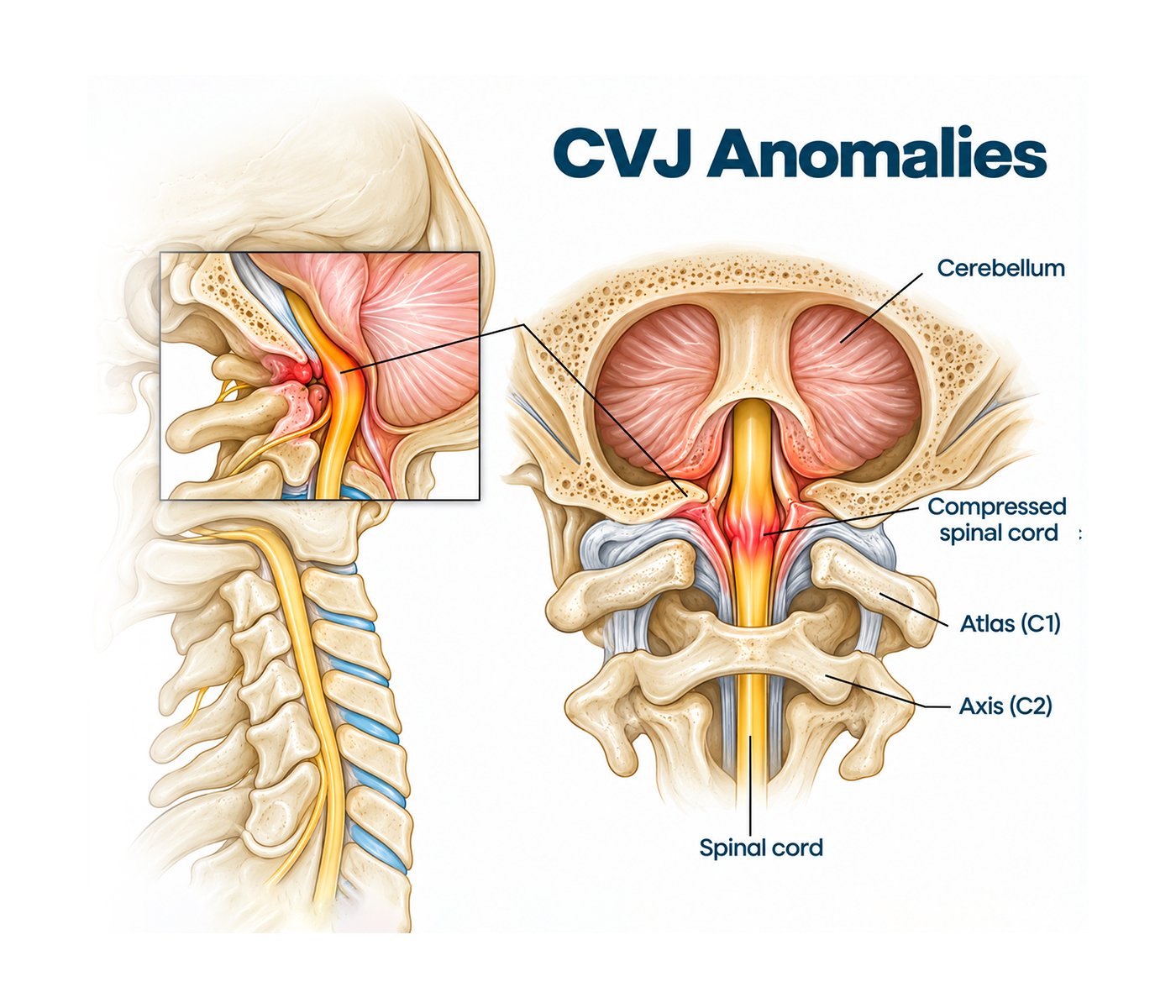
Craniovertebral junction anomalies are congenital or structural malformations involving the junction between the skull and upper cervical spine. Depending on the underlying condition, they may affect alignment, stability, nerves or the spinal cord.
Evaluation includes clinical and neurological assessment with appropriate imaging to understand the anatomy and any associated compression or instability. Treatment planning is individualized according to symptoms, structural findings and neurological status.